
Abstract Jerusalem paintings ask a viewer to do something wonderfully modern and deeply traditional at the same time: look at a holy city not as a fixed view, but as an unfolding experience. That shift matters in modern Jewish art because Jerusalem is never only architecture, and it is never only memory. It is prayer, longing, return, and a lived spiritual center that can be approached through atmosphere as much as through detail. In Alex Levin’s Jerusalem works, abstraction does not dilute meaning. It concentrates it. Color can suggest ascent, light can carry devotion, and composition can make the city feel both present and beyond reach. For readers who want Jewish heritage to feel visually alive in a contemporary home, this approach offers something more useful than decoration. It offers a way to read sacred space.
Explore Abstract Jerusalem Paintings - Modern and Contemporary Jewish Art by Alex Levin at ArtLevin.com.
Jerusalem as light, movement, and inward direction
The first strength of an abstract Jerusalem painting is that it can hold several experiences at once without forcing them into one literal image. A viewer may notice gold radiance, cooler architectural tones, or a path-like movement that leads the eye upward or inward. Those choices are not merely stylistic. They shape how the city is felt. In Jewish visual culture, Jerusalem often carries the weight of devotion, memory, and hope, and abstraction allows those themes to coexist without competing for attention. Instead of demanding that the viewer identify every stone, the painting invites the viewer to sense the city’s emotional structure. That is especially valuable in a modern interior, where a work must speak clearly without becoming visually rigid. A Jerusalem painting built on light and movement can feel active from across the room and rewarding up close, because its meaning is not exhausted by one glance. It keeps opening. For a reader interested in modern Jewish art, this is one of the most important virtues of abstraction: it gives sacred imagery room to breathe while still keeping it anchored in Jewish life.
Temple memory, prayer, and the visual language of return
Another useful way to read these works is to notice how they connect Jerusalem to prayer and to the symbolic center of Jewish continuity. The city is often understood through the Kotel, the Beit HaMikdash, or the longing for wholeness that surrounds them, and abstract composition can express that relationship with remarkable restraint. Warm tones may evoke spiritual focus, while sharper contrasts can create a sense of tension between what is present and what is awaited. In this sense, the painting does not merely refer to Jerusalem; it stages an emotional journey toward it. That matters for collectors and readers because modern Jewish art is most compelling when it keeps faith with memory while speaking in a contemporary register. A successful abstract Jerusalem work can honor sacred reference without turning into illustration. It can suggest gates, ascent, and radiance without spelling them out too literally. The result is a painting that feels spiritually specific and visually open at the same time. It can belong in a study, a living room, or a communal setting because it offers contemplation rather than noise.
Selected artworks to consider
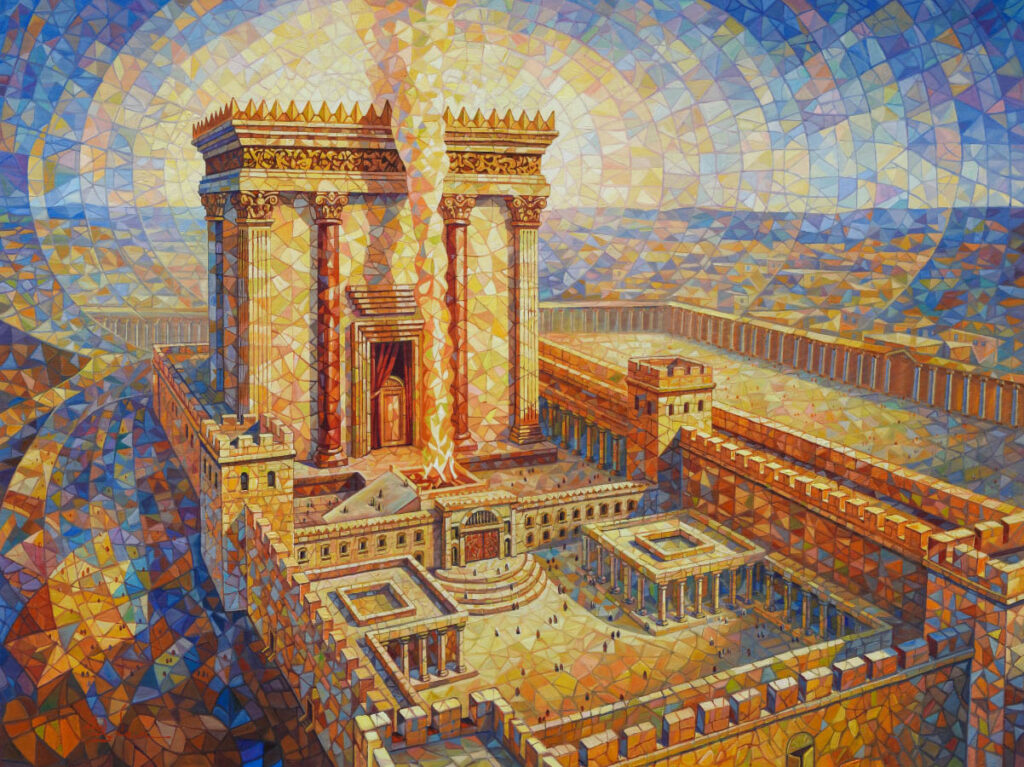
Abstract Jerusalem Painting: Roots of Light The Second Temple
Roots of Light The Second Temple is a strong example of how abstract form can carry sacred memory without becoming decorative shorthand. The title alone points the viewer toward the Temple as a source of spiritual depth, and the painting’s value lies in how that reference can be translated through composition rather than description. In a modern Jewish art context, this kind of work is especially effective because it lets the Temple remain a living idea rather than a closed historical image. The abstraction gives the subject dignity, and the layered visual language allows the viewer to move between surface beauty and inward meaning.
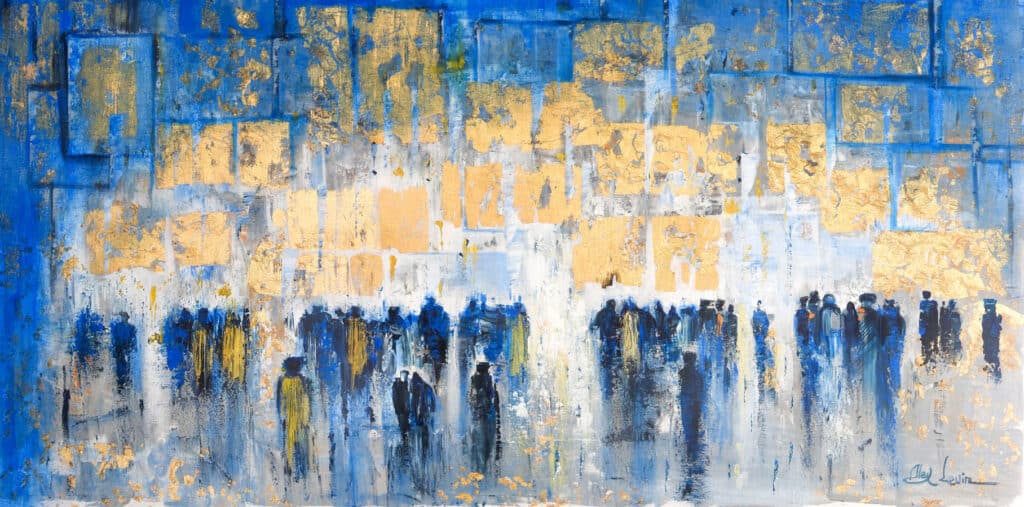
Abstract Jerusalem Painting: Light from the Kotel
Light from the Kotel places prayer at the center of the visual experience while keeping the composition contemporary and open. The Kotel is one of those subjects that can easily become familiar to the point of habit, but abstract treatment restores a sense of encounter. What matters here is not simply that the Wall is present, but that light itself seems to become part of the act of prayer. For readers choosing modern Jewish art for a home or institutional space, this is a particularly useful quality. It gives the work emotional clarity without reducing the sacred place to a single viewpoint.
Abstract Jerusalem Painting: The Golden Light of Jerusalem
The Golden Light of Jerusalem offers a broader, more atmospheric reading of the city. Where some works center on one sacred reference, this one feels like Jerusalem as a whole: luminous, layered, and held together by color. That makes it especially adaptable for readers who want a painting that speaks about the city’s holiness without relying on a single landmark. The golden register suggests continuity and radiance, while the abstract handling keeps the image contemporary. It is the kind of work that can anchor a room while leaving space for the viewer’s own reflection.

Abstract Jerusalem paintings succeed when they do more than represent a place. They turn Jerusalem into a visual experience of memory, prayer, and light, which is exactly why they matter within modern Jewish art. Their strength is not in replacing tradition, but in giving tradition a new surface through which to speak. For readers who care about Jewish heritage, these works offer a way to live with Jerusalem daily, not as a distant ideal, but as a presence that continues to shape the eye and the heart.


No comments:
Post a Comment