
Abstract Jerusalem painting asks a different kind of attention from the viewer. Instead of presenting Jerusalem as a straightforward skyline or a familiar postcard, it translates the city into color, movement, and symbolic light. In Alex Levin’s Abstract Jerusalem Paintings - Modern and Contemporary Jewish Art collection, the city becomes a visual language of holiness, continuity, and inner life.
What makes this approach especially meaningful is that it does not treat Jerusalem as one image with one meaning. The collection suggests a city that is both earthly and heavenly, historical and present, structured and open-ended. Through references to the Kotel, the Temple, the gates of prayer, and the flow of light across the canvas, the paintings invite viewers to read Jerusalem as a living spiritual place. For readers interested in Jewish heritage and culture, this offers something valuable: a way to see how abstraction can carry memory without losing depth.
Explore Abstract Jerusalem Paintings - Modern and Contemporary Jewish Art by Alex Levin at ArtLevin.com.
1. Why abstraction suits Jerusalem so well
Jerusalem is a city that resists a single visual explanation. Its significance is not only architectural but spiritual, emotional, and collective. A realistic painting can show its stones, towers, and streets, but abstraction can go further by suggesting what the city feels like to those who pray, remember, and return to it in thought. In this collection, color and composition carry the weight that a literal scene might otherwise carry through detail alone.
This matters because abstract art allows the viewer to experience Jerusalem as atmosphere. Warm tones can suggest the holiness of the Temple, the glow of hope, or the inner radiance associated with sacred space. Cooler tones can evoke the modern city, distance, reflection, or the quieter side of prayer. The result is not a rejection of tradition, but a different way of honoring it. Rather than explaining Jerusalem in a single frame, the paintings let it unfold in layers.
2. The Kotel as a visual center of prayer and continuity
Several works in the collection turn toward the Kotel as an organizing presence. In abstract form, the Western Wall is not just a physical site but a spiritual anchor. It becomes a point where memory, prayer, and identity meet. That is especially clear in paintings such as Light from the Kotel, Light from Heaven over the Kotel, Light of Faith at the Western Wall, and The Light of the Torah and the Western Wall.
These titles suggest a relationship between stone and light, between what endures below and what descends from above. The wall is not isolated; it is surrounded by motion, radiance, and prayerful energy. For viewers, this shifts the focus from monument to meaning. The Kotel becomes a place where Jewish continuity is not simply remembered but actively felt. In abstract language, the wall can hold silence, longing, gratitude, and strength at the same time.
3. Temple imagery, sacred ascent, and the hope within the city
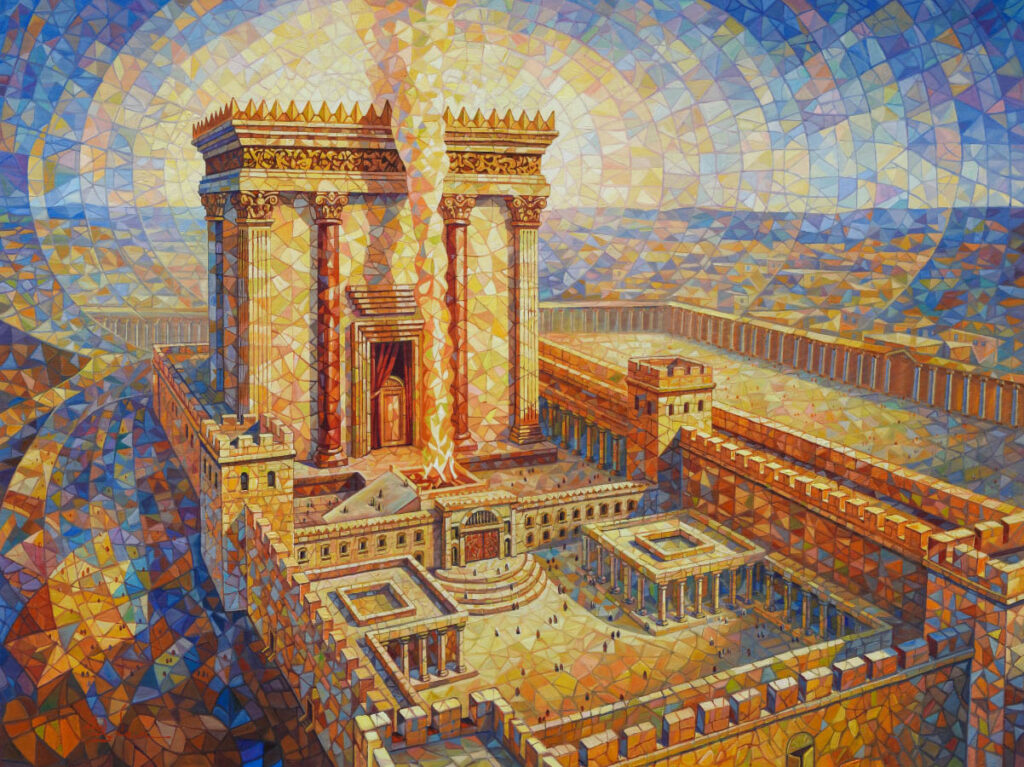
Another important thread in the collection is the connection between Jerusalem, the Temple, and a sense of spiritual ascent. Works such as Roots of Light The Second Temple, The Golden Light of Jerusalem, and The Light of the Messiah over Jerusalem point toward a city understood not only through the past, but also through hope and expectation. The titles themselves establish a movement from origin toward radiance, from memory toward a larger horizon.
In this kind of art, the Temple is not reduced to historical reconstruction. Instead, it becomes a symbol of sacred center. The paintings suggest that Jerusalem contains more than visible streets and walls; it also contains longing for wholeness, renewal, and divine presence. When the visual language shifts between gold, brightness, and layered space, the viewer is invited to think about Jerusalem as a city of ascent. This is one reason abstract Jerusalem art can feel so compelling: it carries history without freezing it, and it carries hope without making it overly literal.
4. Prayer, generations, and the human path through the city
A third way to read this collection is through the human journey it implies. Paintings such as Jerusalem - The Golden Stream of Prayers, The Prayerful Light of Jerusalem, The Path of the Jews Through the Ages, and The Continuity of Israel's Generations expand the story beyond place alone. They place human devotion, inheritance, and passage at the center of the composition.
This is where abstract art becomes especially useful for Jewish heritage. It can show not just where Jerusalem is, but what it means to move toward it across generations. The idea of a stream of prayers suggests motion that is continuous but never identical. Each generation adds its own layer to the larger story. That sense of continuity gives the collection a distinctive cultural value: it frames Jerusalem not as a fixed icon, but as a shared inheritance still unfolding. In this reading, the paintings are less about observation and more about participation in a living tradition.
Abstract Jerusalem Painting: Roots of Light The Second Temple
Roots of Light The Second Temple is useful for readers who want to understand how the collection connects abstraction with Temple memory. Its title alone links origin, radiance, and sacred history, making it a strong example of how the series moves from symbol to spiritual meaning.
Abstract Jerusalem Painting: Light from Heaven over the Kotel
Light from Heaven over the Kotel expresses the collection’s central idea that the Western Wall is both earthly and transcendent. It is a fitting example of how light can be used to suggest prayer, presence, and divine nearness without relying on literal detail.

Abstract Jerusalem Painting: Jerusalem – The Golden Stream of Prayers
Jerusalem - The Golden Stream of Prayers captures the sense of movement that runs through the entire series. The title suggests prayer not as a single act, but as a flowing continuity that binds viewers to the city and to one another across time.
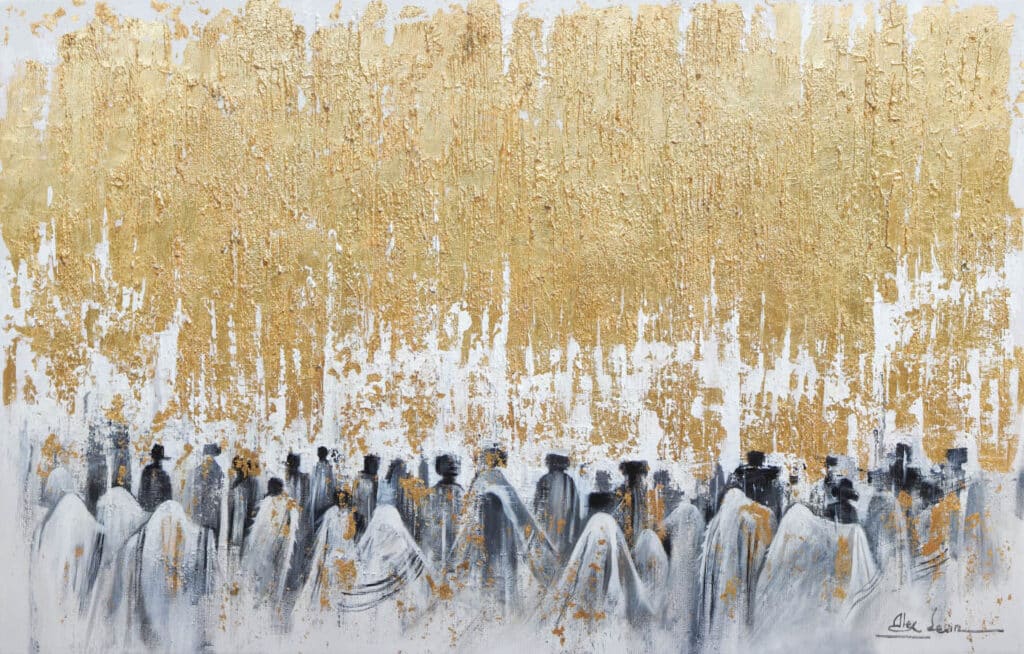
Abstract Jerusalem Painting: The Path of the Jews Through the Ages
The Path of the Jews Through the Ages adds a historical and cultural dimension to the collection. It helps readers see abstract Jerusalem art as a way of visualizing Jewish endurance, passage, and identity rather than simply depicting a place.

Abstract Jewish Painting: The Continuity of Israel’s Generations
The Continuity of Israel's Generations is especially useful for readers interested in heritage. It reinforces one of the collection’s most important themes: that Jerusalem in art can represent inheritance, memory, and the ongoing transmission of meaning from one generation to the next.

Abstract Jerusalem painting succeeds when it does more than beautify a wall. In Alex Levin’s collection, abstraction becomes a way of carrying Jerusalem’s deepest associations: prayer at the Kotel, memory of the Temple, continuity across generations, and the hope that sacred history remains present in modern life. The city appears not as a single view, but as a layered experience of light, movement, and devotion.
For readers drawn to Jewish art and heritage, this approach offers a valuable perspective. It reminds us that Jerusalem can be understood through atmosphere as much as architecture. In that sense, abstract painting does not distance us from the city. It can bring us closer to its emotional and spiritual core.

